Making time zones work for your relationship
By The TwoFrames team·Updated 28 Sept 2026·2 min read
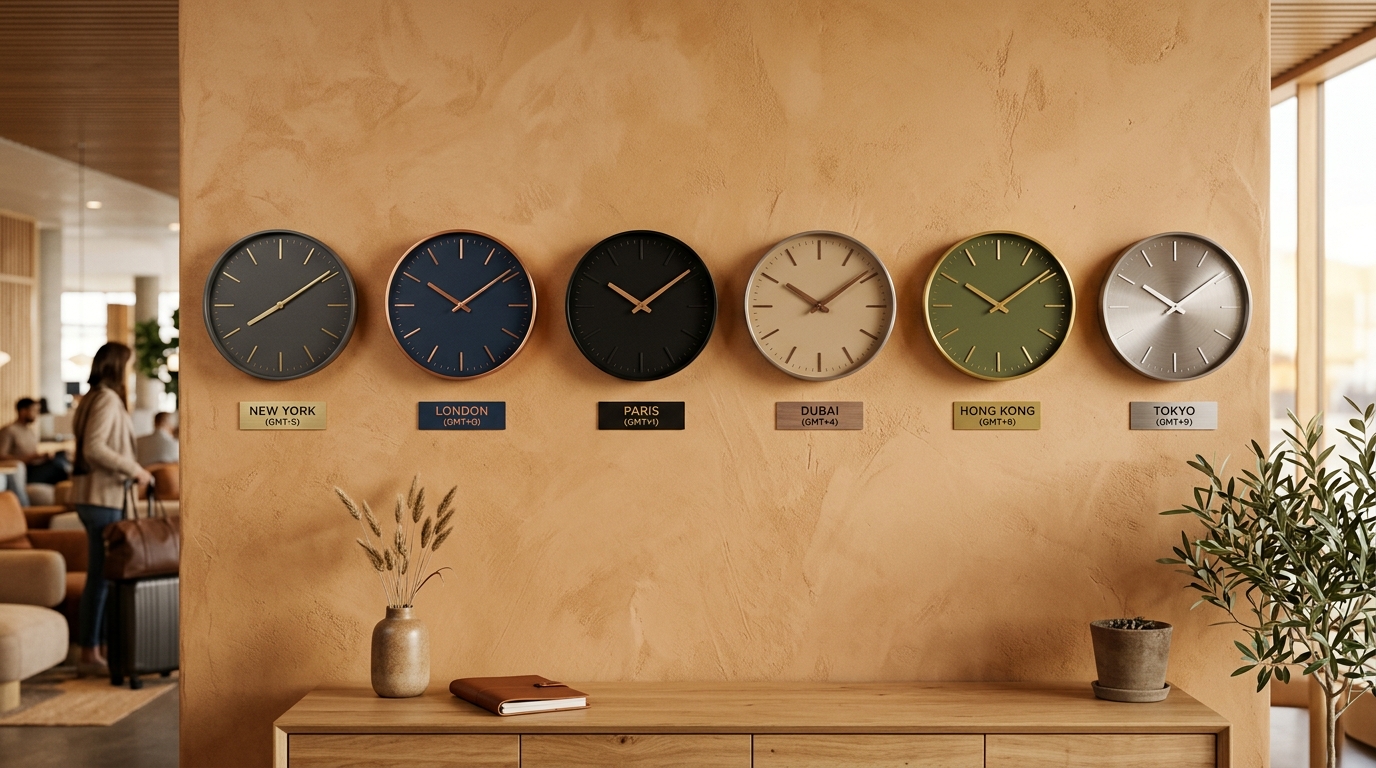
A nine-hour gap doesn't have to mean two separate lives. It does mean you need a plan, because "we'll talk when we're both free" quietly turns into "we barely talk". Here's how couples keep a rhythm that works for both of them.
Find your daily overlap
Write down the hours you're both awake and not at work or asleep. For some couples that's a generous evening window; for others it's twenty minutes before one person's bedtime.
Whatever it is, protect it. A short call at the same time every day beats an unpredictable hour. Predictability is what makes the distance feel manageable.
Take turns being inconvenienced
Someone usually ends up waking early or staying up late. Share that fairly: alternate weeks, or split it so each of you gives up a little. Resentment builds quietly when one person always adjusts.
Go async on purpose
The hours you can't overlap don't have to be silent. A few things that make the gaps feel shorter:
- Voice notes instead of texts, so they hear your voice
- A photo of something ordinary: your lunch, your commute, the sky
- A daily question you both answer on your own time, then reveal together
- A short "good morning" message timed to arrive when they wake up
Anchor the week with one long date
Pick one slot each week that's protected: a film, a photobooth strip, a shared recipe. Put it in both calendars, in both time zones, and treat it like you would a dinner reservation.
Show both clocks
Keep your partner's local time somewhere you'll see it: your phone's world clock, a widget, or the room you share in TwoFrames, which shows both cities and times side by side. You'll stop sending "are you up?" at 3 a.m. their time.
Keep a shared countdown
Knowing exactly how many days are left turns waiting into looking forward. Put the date of your next visit where you'll both see it every day, and celebrate the milestones: 30 days, 10 days, tomorrow.
Talk about the schedule itself
Every few weeks, ask each other: is this still working? Jobs change, semesters end, daylight saving shifts the gap by an hour. A five-minute check-in on the schedule saves a lot of quiet frustration.
Start your shared countdown
Set your next meetup and it appears on both your screens.